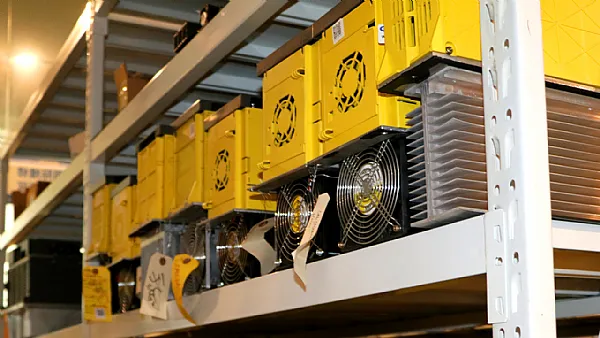
This content I try to use a more realistic view of the industry to make clear the appearance of
Fanuc drive characteristics, series differences, how to see the number, spindle and servo how to divide. Not according to the kind of "1.2.3.4” structure to speak, but in accordance with our usual in the field, in the factory, in front of the test bench will actually encounter the way to explain, will be closer to the actual use of the scene.
Fanuc drive in the end responsible for what?
Simply put, it is the controller and the motor between the "power amplifier”. Controller to the command, the drive to amplify the signal, servo motor or spindle motor will be in accordance with your set position, speed, acceleration run up.
Our side of the most common maintenance faults, 80% have occurred in the drive section: IGBT fried, regenerative resistor burned out, fiber optic interface broken, feedback abnormalities, fan stalled resulting in overheating ...... These problems are high regardless of Fanuc α series, αi series or βi series.
If you know their models, appearance, series logic, field judgment failure will be very much faster.
Fanuc drive appearance characteristics: in fact, it is very good to identify
You only need to see once Fanuc drive, basically can rely on the "yellow + black” color scheme to confirm the general direction. However, OEM machine tool factories sometimes customize the housing, so we usually still have to look at the full model number on the nameplate (A06B-xxxx-H***). There's no way to be lazy in this business, and in the end you have to look at the label.
But you can also generally tell a few things from the appearance:
* How dense and thick the heatsinks are, which usually represents the power level
* Smaller and thinner heatsinks are usually β or βi series
* Thick and heavy heatsinks with a large area are most likely spindle drives
* The layout of the interfaces (fiber optic, U/V/W, 24V) on the right side or the bottom can also tell the difference between series generations
Some maintenance masters even rely on "screw position” and "fan style” to determine the model, I can only say that experience is too rich.
Fanuc's model number A06B-xxxx-Hxxx is how to read?
What we see most on the shelves every day is this string of codes, all kinds of A06B-6088, A06B-6096, A06B-6132.
* A06B: This is the Fanuc drive's big class number
* The 4 to 5 digits in the middle: the real series code, such as 6079, 6088, 6096, 6130, 6132
* Hxxx last three: voltage level, power, axis number of these all hidden here!
But note one thing:
The rules of Hxxx are different for each generation, and there is no way to explain all models with a "fixed formula”. Hxxx
Therefore, the final judgment will always depend on the official specification sheet of the drive. You can guess 80% by experience, but you still need to check the information to be sure.
Fanuc α, αi, β, βi What is the difference between these series?
This is the most common question. When we explain to customers, we usually do not use too academic terms, usually this analogy:
1. α: the old performance monster
Most of these drives are large and heavy, with very thick heat sinks. They are common in 5-axis, gantry, and spindle drives for older machine tools. Torquey and durable, but relatively old generation.
2. αi: the evolution of α
Controls are more modern, communication is basically fiber optic FSSB, better support for new encoders. The most common compatibility question we encounter when changing parts is: "Does the controller support fiber optic communication of αi?”
3. β: the economizer
Thin, light, price friendly, not very powerful, very common in light duty, small equipment, automated machinery.
4. βi: β upgraded
Smaller and more integrated, it is the most common driver for many small and medium-sized lathes, drilling and tapping machines, and automation modules. Common models like A06B-6130, A06B-6132, are them.
If you see a Fanuc drive small thin, nine times out of ten is β or βi series.
Between controllers and drives, you can't mix and match
This is a lot of customers are easy to ignore the point.
For example:
* 0i series generally can take α / αi / βi, the widest range
* 16/18/21 These old machines are usually matched with old αi
* 30i/31i/32i most common αi or βi
The most critical thing is not the series number, but:
Controller communication method needs to match (fiber optic FSSB vs early parallel). No match, just don't start. This is the most important thing to remember.
We have encountered too many cases of "buy back plugged in not light”, 90% is the communication generation is not right.
Servo drive vs spindle drive: you can tell the difference at a glance from the outside
Servo drive (SV/SVM)
* Thin, power output is not big
* Control XYZABC these servo axes
* The nameplate will say SERVO AMPLIFIER
Spindle drive (SP/SPM)
* Thick and heavy, with exaggerated heat sinks
* Power terminals (U/V/W) is particularly large
* The nameplate says SPINDLE AMPLIFIER
Take it apart once and you'll never be able to tell the difference again.
Why do common faults occur?
We encounter these problems almost every day:
* IGBT fires
* Regenerative resistors burnt out
* Loose or broken fiber optic ports
* Capacitor not starting due to aging
* Abnormal internal power supply
* Overheating alarm of the whole drive after fan stops
* Short circuit due to oxidized terminal
Generally we recommend customers:
* Blow the dust once every six months
* The cabinet should be well ventilated
* Do not fold the fiber too hard
* Five to seven years to check the capacitance (but this is not absolute, depending on the environment)
* Moisture, metal dust these environments are drive killers
These are real experiences.
What does Songwei offer in the area of drives?
We test Fanuc servo drives, spindle drives, I/O, controllers, and all kinds of α/αi/βi drives every day. There are machine tools that need parts urgently, and there are also customers who just need to confirm compatibility, or want to know if they can be repaired.
We can help you:
* Check the model number, matching relationship
* Determine whether compatible or interchangeable
* Provide new, used and refurbished versions
* Do in-depth repair of IGBT, capacitor, fiber optic interface, etc
* Simulate the actual CNC environment with the
Fanuc test bench power on to do testing
As long as you give us the model number or nameplate diagram,
Songwei team can basically quickly determine whether we can help you.



